
Superheated Steam Drying System
Turning food waste into edible ingredients with a long shelf life.
The Superheated Steam Drying System quickly dries and sterilizes food ingredients in a low-oxygen environment, processing them into edible materials with a long shelf life. We use the equipment through an alliance with Shikoukan Co., Ltd., a developer of superheated steam equipment. Our role is to sell and promote it and to provide mobile processing ("caravan") at the sites where food waste is generated. By turning ingredients that used to be thrown away into fine powders, we upcycle them and help reduce food loss.
What is superheated steam?
Superheated steam is ordinary steam (100°C) heated further to much higher temperatures (200–1,300°C), producing an invisible, ultra-hot vapor. Think of it as an industrial-scale system that works on the same principle as home ovens that "bake with water."
- No scorching, no oxidation: Steam creates a low-oxygen environment, so color, flavor and nutrients are preserved.
- Fast drying and sterilization: About twice as efficient as hot-air drying (about 90% dried in 20 minutes), sterilizing right through to the core.
- No oil: Rather than frying (as with potato chips), it "dries" food with the heat of steam.
How this business began
While sourcing carefully selected regional ingredients directly from producers, we came to see that large amounts of perfectly edible food were being thrown away: peels and seeds left over from juice production, and fruit and vegetables discarded for failing to meet standards. We wanted to turn them into edible ingredients. With that goal, we formed an alliance with Shikoukan Co., Ltd., a developer of superheated steam equipment, to put its drying, sterilizing and fine-powdering technology to use. We then began mobile processing ("caravan"), taking the equipment to the sites where food waste is generated. Our role is to sell and promote the equipment and to provide on-site processing services.
Alliance partner: Shikoukan Co., Ltd. (developer of the superheated steam equipment)
Media coverage: Kanagawa Industrial Promotion Center (KIP) blog: "Solving Social Issues — Reducing Food Loss with Superheated Steam Equipment"
Power Vision's role
The superheated steam equipment and technology were developed by our alliance partner, Shikoukan Co., Ltd. Power Vision is not an equipment manufacturer. We are a service provider: we bring that technology to the sites where food waste is generated and turn it into edible ingredients on the spot, through mobile processing ("caravan"), and we handle sales and promotion.
- We bring it on site: We load the equipment and process food waste close to the farms and processing plants where it is generated.
- We make it edible: We dry, sterilize and finely powder it into edible ingredients with a long shelf life.
- We spread it: Under our alliance with Shikoukan (development and sales agreement), we find and develop new applications.
Key features
Drying, sterilization and fine powdering
Superheated steam in a low-oxygen environment dries and sterilizes ingredients at the same time, quickly and with minimal oxidation.
Reducing food loss
Ingredients that used to be thrown away are upcycled into edible materials that can be stored.
High-temperature superheated steam
Steam is turned into a high-temperature gas of 200–1,300°C, enabling optimal drying for each ingredient across a wide temperature range.
Fine powdering
Dried ingredients are ground in a high-speed mill into fine powder of about 100µm.
Mobile (on-site processing)
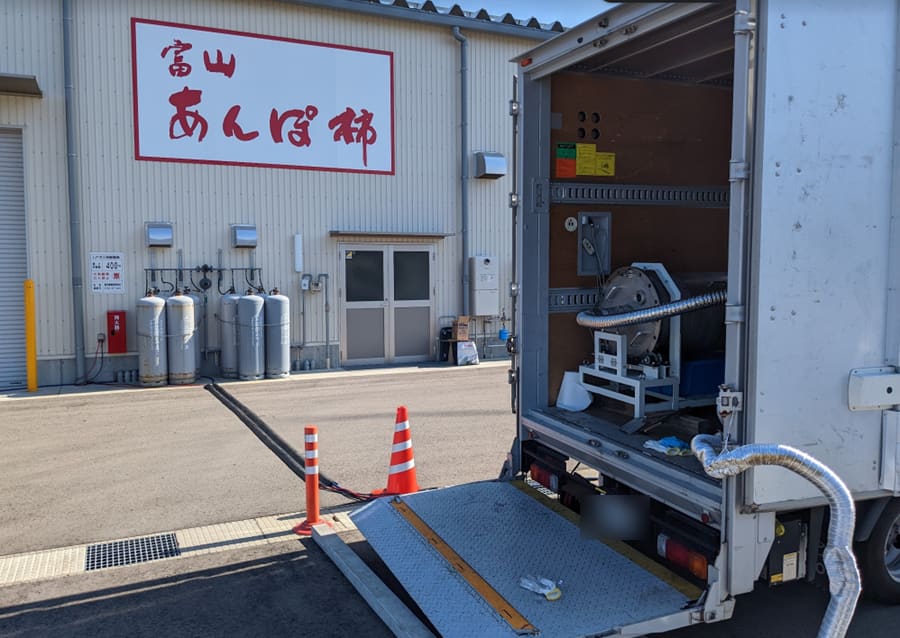
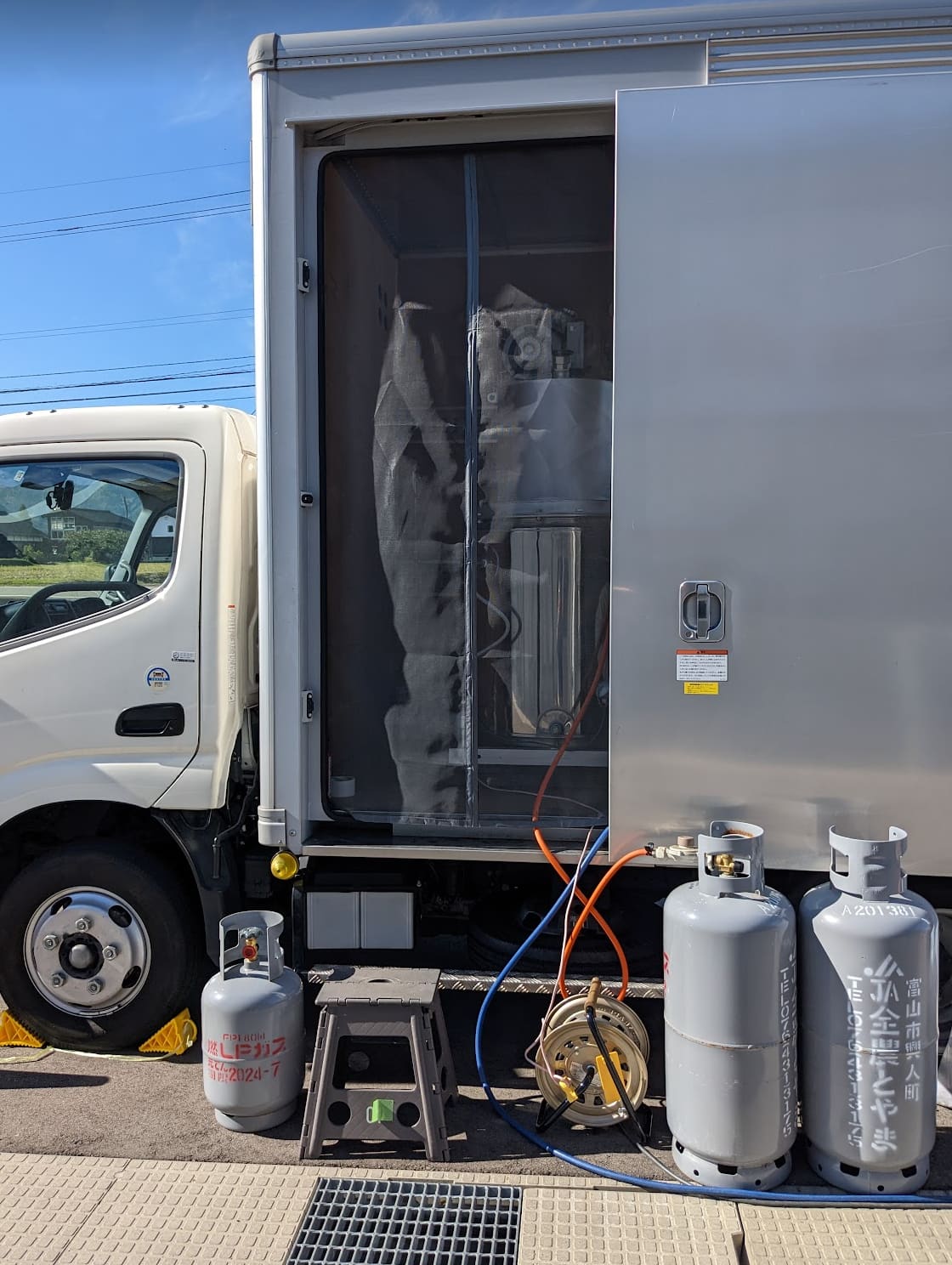
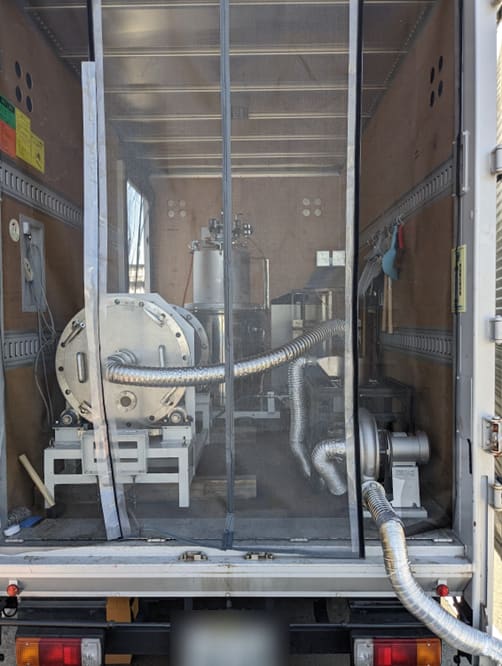
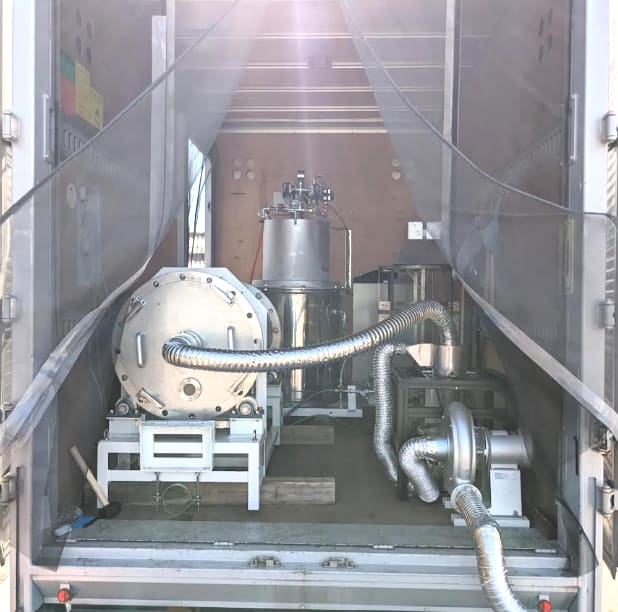
With the superheated steam equipment mounted on a truck bed, ingredients can be dried, sterilized and powdered right next to the sites where food waste is generated.
Three machines
All three were developed by our alliance partner, Shikoukan Co., Ltd. Power Vision puts them to work on site and handles their sales and promotion.
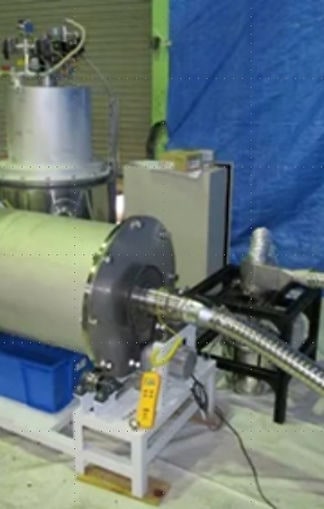
Superheated Steam Dryer
Turns steam into a high-temperature gas of 200–1,300°C to dry and sterilize ingredients quickly in a low-oxygen environment. Because three types of heat transfer (convection, condensation and radiation) reach the material directly, it dries about twice as efficiently as hot-air drying.
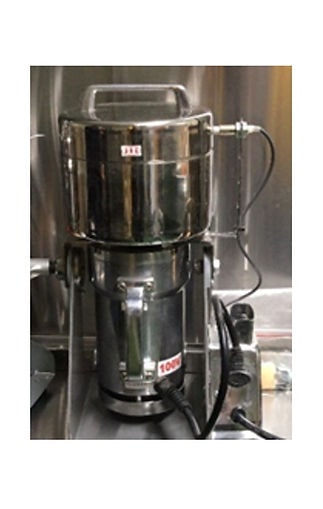
High-Speed Mill
Grinds dried ingredients in a high-speed mill running at 10,000 rpm, reducing them to a fine powder of about 100µm.
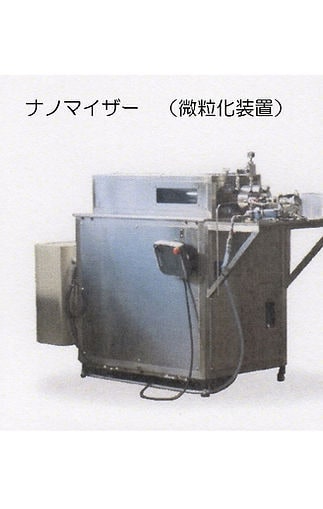
Nanomizer
Further reduces powdered ingredients to particles of 10µm–200nm. It can emulsify and disperse them into a colloidal state, and has a proven track record as a milk homogenizer.
Persimmon peel drying, sterilization and powdering trial
We mounted the superheated steam equipment on the bed of a truck, went to a persimmon processing site and tried drying, sterilizing and powdering persimmon peel.
Key specifications
- Processing temperature
- Freely controllable from 200 to 1,300°C (superheated steam)
- Drying efficiency
- About 90% in 20 minutes (100g → 30g; about twice as fast as hot-air drying)
- Fine powdering
- About 100µm (mill) to 10µm–200nm (Nanomizer)
- Processing format
- Stationary units, as well as truck-mounted mobile units
How it differs from hot-air drying
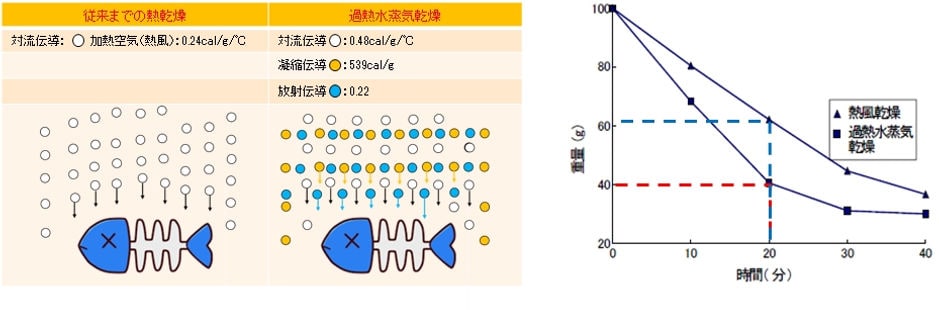
- Conventional hot-air drying relies on convective heat transfer (heated air) alone (approx. 0.24 cal/g°C). Superheated steam drying, by contrast, delivers three types of heat directly to the material: convection (approx. 0.48 cal/g°C), condensation (approx. 539 cal/g) and radiation (approx. 0.22). This allows it to dry materials rapidly and all at once.
- With superheated steam, a drying rate of about 90% is reached in 20 minutes (100g → 30g), cutting drying time to about half that of hot-air drying.
- Because drying takes place in a low-oxygen environment, there is little scorching or loss of flavor, and nutrients are less prone to oxidation.
12 advantages of superheated steam drying
- 01Dries in a short time
- 02Uses less energy for drying
- 03Low-oxygen environment preserves flavor and umami
- 04Low-oxygen environment prevents nutrients from being lost to oxidation
- 05Less prone to scorching
- 06Sterilizes right through to the inside of the food
- 07Sterilizes seeds (grains and beans) while preserving their physiological functions
- 08Drying temperature freely controllable from 200°C to 1,300°C
- 09Simple equipment that is easy and inexpensive to maintain
- 10Can dry materials with complex shapes (including hard-to-dry areas)
- 11No preheating needed, so it starts up quickly
- 12The expansion of water creates a natural airflow, so no forced-draft blower is needed
Target materials
Ingredients like these, which used to be thrown away, can be upcycled into edible materials.
- Potato skins
- Vegetable skins
- Grain husks (rice bran, wheat bran)
- Crustacean shells
- Bean skins
- Citrus peels
- Fish bones, innards and trimmings
- Onion skins
Process flow
- 01
Loading
Waste or surplus ingredients are loaded into the equipment.
- 02
Drying and sterilization
Low-oxygen superheated steam dries and sterilizes them in a short time.
- 03
Fine powdering
A high-speed mill and Nanomizer reduce them to a fine powder.
- 04
Edible ingredients
They are upcycled into edible ingredients (powders) with a long shelf life.
Examples of drying, sterilization and powdering
- Rice bran
- Okara (soy pulp)
- Moromi (fermenting mash)
- Adzuki bean skins
- Grape skins
- Ginger peel
- Horse mackerel
- Red gurnard
- Shijimi clams
- Dried-persimmon peel
Product development and future plans
Dried and powdered materials can be used in a wide range of products, from bread and sweets to flavorings.
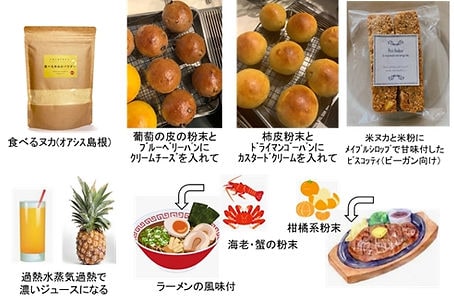
- Edible rice bran (Oasis Shimane)
- Grape skin powder × blueberry bread
- Persimmon peel powder × dried orange
- Rice bran powder × biscotti (vegan)
- Concentrated juice
- Flavoring for ramen
- Shrimp and crab powder
- Citrus powder × steak
Wider applications
Beyond giving food waste a second life, this "bake with water" technology has a wide range of applications built around drying and sterilization.
Upcycling food waste
Turning persimmon peel, rice bran, okara, sake lees, grape skins, seafood by-products and more into edible ingredients and fine powders.
Sterilization
Sterilizing spices, powders and dried foods without chemicals while preserving their flavor.
Drying and roasting
Drying vegetables and fruit, and roasting grains and beans. The low-oxygen environment protects flavor and nutrients.
Industrial drying and sterilization
Also applicable to industrial equipment beyond food, with potential uses such as drying and reducing the volume of sludge and biomass.
Mobile (on-site processing)
Drying, sterilizing and powdering right next to where the waste is generated, keeping transport costs down and circulating resources within the region.
Talk to us about this business
Please feel free to contact us for quotes, implementation inquiries or media requests.